3 days in Hiroshima: an itinerary timed to opening hours
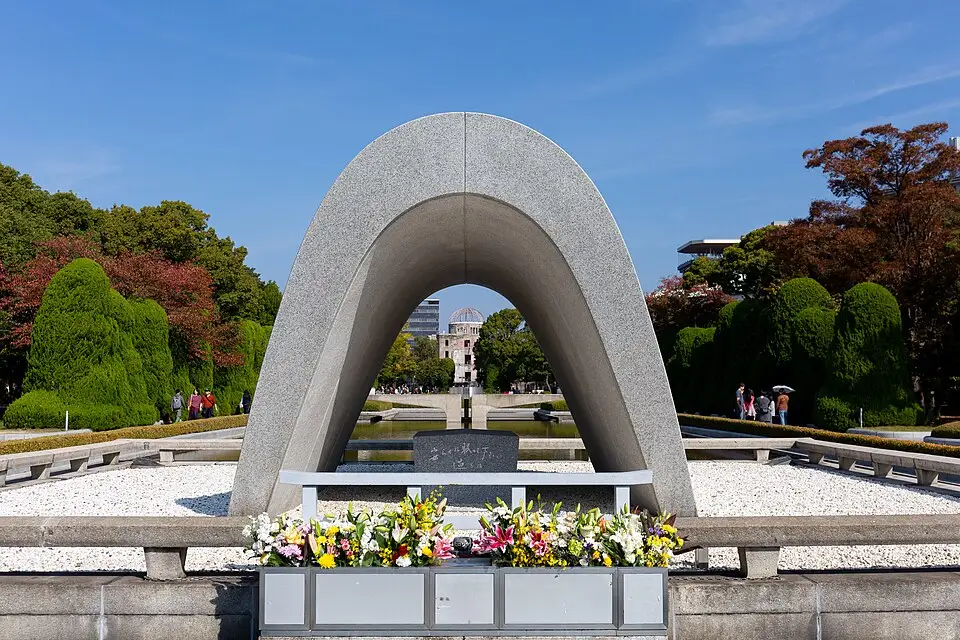
In short: TourMyDay's 3-day sample plan for Hiroshima has 18 stops, each timed to its opening hours and in walking order, starting at Hiroshima Peace Memorial Park at 9:00 AM.
Written with AI from TourMyDay's own city data (sights, opening hours, the app's planner), not by a local expert. How TourMyDay works →
Hiroshima is a compact city that rewards walking. The core of the visit, Peace Memorial Park and the Peace Memorial Museum, sits near the river, and many other stops lie within a short stroll across the bridges that cross the delta. Expect flat streets, tram lines, and plenty of places to rest between sights.
The sights below add up to a day that moves from history to gardens to art. The memorial park and museum carry the weight of the city's story, while Hiroshima Castle, Shukkei-en and the museums offer calmer hours. Because several places close on set days and shorten their hours in winter, the order of a day matters, and the plan below keeps stops in walking sequence.
Sample itinerary
Planned by the TourMyDay app around real opening hours, in walking order, with a lunch break.
Day 1: Memorial park and gardens
Begin at Peace Memorial Park, cross Motoyasu Bridge to the atomic bombing site, continue to Hiroshima Castle, then finish at Shukkei-en and the cathedral.
- Hiroshima Peace Memorial Park
- 4 min walk
- Motoyasu Bridge
- 8 min walk
- atomic bombing of Hiroshima
- 18 min walk
- Hiroshima Castle
- 🍽️ Lunch: Garden House Hiroshima
- 13 min walk
- Shukkei-en
- 9 min walk
- Assumption of Mary Cathedral, Hiroshima
Day 2: Art, bridges and the harbour side
Start at the Museum of Art, walk past Hiroshima Orizuru Tower to Aioi Bridge, stop at the public lavatory, then cross Peace Bridge to finish at the Former Bank of Japan Hiroshima Branch.
- Hiroshima Museum of Art
- 7 min walk
- Hiroshima Orizuru Tower
- 3 min walk
- Aioi Bridge
- 6 min walk
- Honkawa Public Lavatory
- 🍽️ Lunch: Parco della Pace
- 8 min walk
- Peace Bridge
- 5 min walk
- Former Bank of Japan Hiroshima Branch
Day 3: Museum and contemporary art
Open at the Peace Memorial Museum, move on to the Prefectural Art Museum, cross Station Square Bridge and Enkō Bridge, then end at the City Museum of Contemporary Art and Kōjin Bridge.
- Hiroshima Peace Memorial Museum
- 29 min walk
- Hiroshima Prefectural Art Museum
- 🍽️ Lunch: ゾーナ・イタリア
- 15 min walk
- Station Square Bridge (Hiroshima)
- 2 min walk
- Enkō Bridge
- 16 min walk
- Hiroshima City Museum of Contemporary Art
- 14 min walk
- Kōjin Bridge
Top sights
Hiroshima Peace Memorial Park
The city's central memorial space, with the Children's Peace Monument and the Cenotaph for the A-Bomb Victims. Open air, so allow unhurried time to walk and reflect.
☀️ Open airHiroshima Castle
A reconstructed castle in a park setting. Look for the Gokoku Shrine and the ruins of the Air Defense Room, and let the grounds set the pace.
Hiroshima Peace Memorial Museum
The essential museum of the city's history, with a moving account of the bombing. Hours shift by season, so check the day's opening time before you go.
🕘 Mar-Jul 07:30-19:00; Aug 07:30-20:00; Sep-Nov 07:30-19:00; Dec-Feb 07:30-18:00; Dec 30-31 offatomic bombing of Hiroshima
The event itself is the subject of the museum and memorial park. Understanding it gives context to the whole city, so approach it before wandering elsewhere.
Aioi Bridge
A distinctive bridge with a famous place in the city's history, worth a short stop on the walk between the park and the river.
☀️ Open airShukkei-en
A classic strolling garden with ponds and tea house views. Its closing time moves with the season, so visit earlier in the day.
🕘 Mar 16-Sep 15 09:00-18:00; Sep 15-Mar 15 09:00-17:00; Dec 29-31 offAssumption of Mary Cathedral, Hiroshima
A Catholic cathedral that makes a quiet final stop near the gardens. Check visiting times before arriving, as services can limit access.
Hiroshima Museum of Art
A museum of Western and Japanese art with a calm atmosphere. It is closed on Mondays, so plan around that day.
🕘 Tu-Su 09:00-17:00; Mo offHonkawa Public Lavatory
A public toilet on the route, useful for a break between longer stops on the walk.
Hiroshima City Museum of Contemporary Art
A contemporary art museum that is open most days in the late morning and afternoon. A good choice for a relaxed afternoon.
🕘 Tu-Su 10:00-17:00Hiroshima Prefectural Art Museum
A prefectural art museum with changing exhibitions. It is closed on Mondays and over the New Year period.
🕘 Sa-Th,PH 09:00-17:00; Mo off; Dec 25-Jan 01 offHiroshima Tōshō-gū
A Shinto shrine with a traditional atmosphere, a short walk from the city centre and a pleasant stop between other sights.
Tips
- Visit the Peace Memorial Museum early in the day, as it opens at 07:30 and closes earlier in winter.
- Check closing days before you go: the Museum of Art and the Prefectural Art Museum are closed on Mondays.
- Allow comfortable shoes; most stops are linked by flat walking routes and bridges across the river.
- Shukkei-en closes earlier from mid-September to mid-March, so arrive before the afternoon ends.
Best time to visit
Spring and autumn offer mild weather for walking and clear gardens. Mornings are best for the memorial park and museum, before crowds build.
Plan your own days here, offline
TourMyDay plans every day around your taste and pace, with real opening hours, and it works with no signal.
Download on theApp StoreQuestions
How many days do you need in Hiroshima?
Three days allow a relaxed pace through the memorial sites, the castle, the gardens and the art museums without rushing.
Can you see Hiroshima on foot?
Yes, most of the central sights are close together and linked by walkable streets and bridges, though some trips may use trams.
What is closed when?
Several museums close on Mondays, the Peace Memorial Museum is closed around New Year, and gardens shorten their hours in winter.
Can you use TourMyDay offline?
Yes, TourMyDay plans your day around real opening hours in walking order and works offline once the plan is made.
How this guide was made: the sights and their opening hours come from the city's TourMyDay download (OpenStreetMap, Wikidata and the places' own websites), the sample plan was made by the app's planner, and the text was written with AI from those facts. How TourMyDay works →